
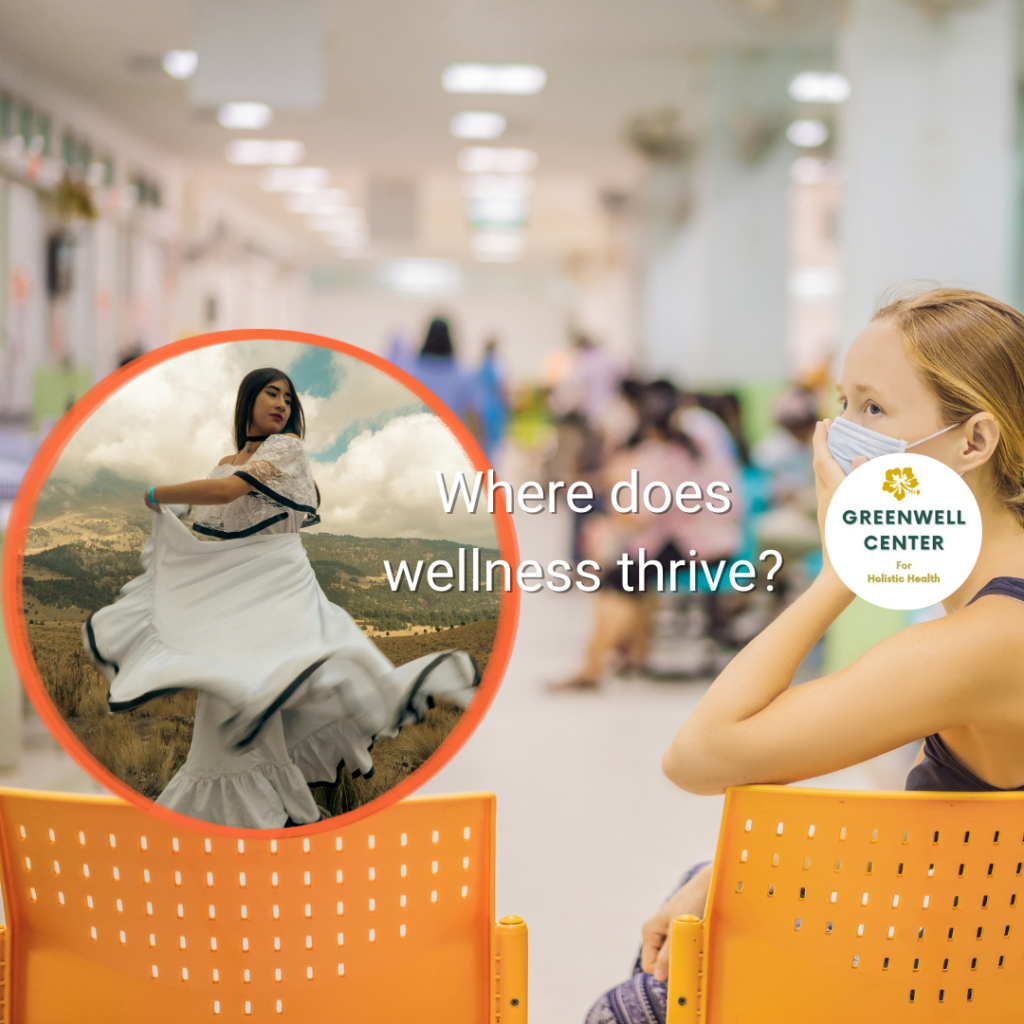
Rethinking How Canada Defines Wellness
If we want to change healthcare outcomes in Canada, we must first ask a deeper question:
What exactly are we measuring?
Because what we measure shapes what we fund.
What we fund shapes what we value.
And what we value shapes how we live.
Right now, much of Canada’s understanding of “wellbeing” is being guided through economic and productivity lenses rather than lived health realities.
And that may be part of how we got here.
What Do We Know About Canada and Measuring Our Health?
1. The Federal Quality of Life Framework
The Department of Finance is leading Canada’s wellbeing tracking strategy through:
Measuring What Matters: Toward a Quality of Life Strategy for Canada
https://www.canada.ca/en/department-finance/services/publications/measuring-what-matters-toward-quality-life-strategy-canada.html
While this represents progress in broadening the conversation beyond GDP, it is still situated within economic policy structures. Health is viewed as one component within economic stability, productivity, housing, and affordability discussions.
The result?
Health becomes downstream of financial systems rather than foundational to them.
2. The Canadian Index of Wellbeing (CIW)
Canada does not have a single federally adopted index that defines wellbeing holistically. The most comprehensive independent framework comes from the University of Waterloo:
About the Canadian Index of Wellbeing
https://uwaterloo.ca/canadian-index-wellbeing/about-canadian-index-wellbeing/wellbeing-canada
The CIW includes domains such as:
- Community vitality
- Democratic engagement
- Education
- Environment
- Healthy populations
- Leisure and culture
- Living standards
- Time use
This is closer to a holistic model — yet it is not the central driver of provincial health funding decisions.
3. How We Measure Time
One striking indicator of how we define health is how we measure time:
Time Use – Canadian Index of Wellbeing National Report
https://uwaterloo.ca/canadian-index-wellbeing/reports/canadian-index-wellbeing-national-report/time-use
Time is categorized largely around:
- Paid work
- Unpaid work
- Caregiving
- Personal care
- Leisure
But the system does not deeply assess the qualitative impact of:
- Cultural participation
- Community gathering
- Nature immersion
- Arts engagement
These are categorized as leisure — not as health infrastructure.
Yet we know that chronic stress, overwork, isolation, and sedentary lifestyles are primary contributors to chronic disease.
4. Measuring Community Wellbeing
Communities can assess themselves through:
Our Wellbeing Survey – Canadian Index of Wellbeing
https://uwaterloo.ca/canadian-index-wellbeing/what-we-do/how-it-works/our-wellbeing-survey
This tool offers promise. It allows municipalities to examine community vitality, belonging, and access to resources.
But again, this is not the core framework used to define provincial healthcare success.
Hospital wait times are measured.
Surgical capacity is measured.
Economic growth is measured.
Belonging, cultural continuity, and nervous system regulation? Not so much.
5. Youth Wellbeing in Canada
For children and youth, we turn to:
Canadian Index of Child and Youth Well-being – UNICEF Canada
https://www.unicef.ca/sites/default/files/2022-07/2019_Baseline_Report_Canadian_Index_of_Child_and_Youth_Well-being%281%29.pdf
This report highlights:
- Mental health concerns
- Social inequities
- Educational outcomes
- Risk behaviours
Yet even here, while social determinants are acknowledged, the cultural and community-based protective factors are not deeply integrated into provincial healthcare investment strategies.
6. The Eight Dimensions of Wellbeing
The Okanagan Office of McMaster University outlines:
Eight Dimensions of Wellbeing – McMaster Okanagan
https://okanagan.mcmaster.ca/about-us/eight-dimensions-of-wellbeing/#:~:text=The%20Eight%20Dimensions%20of%20Well%2Dbeing%20include%20physical%2C%20emotional%2C,overall%20health%20and%20well%2Dbeing.
These include:
- Physical
- Emotional
- Social
- Spiritual
- Intellectual
- Occupational
- Financial
- Environmental
This is a multidimensional model — one that begins to reflect a systems view.
And through:
McMaster Okanagan Initiatives
https://okanagan.mcmaster.ca/initiatives/
we see innovation happening in wellbeing spaces.
But again, these are often institutional initiatives — not embedded at the level of provincial health budget design.
How Did We Get Here?
Over decades, healthcare became synonymous with:
- Acute care
- Hospital beds
- Pharmaceuticals
- Diagnostic testing
- Surgical intervention
Meanwhile, the upstream determinants of health — culture, belonging, purpose, movement, environment — were categorized as “lifestyle choices.”
The confusion arose because:
We began measuring disease management instead of measuring health creation.
Economic output became easier to quantify than community vitality.
And so our systems evolved accordingly.
The Missing Lens: Quality of Living
If we truly want to change health outcomes in Nova Scotia and across Canada, we must shift from:
Healthcare Delivery
to
Health Creation.
Health is cultivated through:
- Community
- Culture
- Heritage
- Arts
- Tourism
- Nature engagement
- Intergenerational connection
On the East Coast, these are not luxuries.
They are our way of life.
Ceilidhs regulate nervous systems.
Storytelling metabolizes grief.
Music synchronizes heart rhythms.
Movement sustains mobility.
Ocean air invites restoration.
Yet none of these are central line items in healthcare budgets.
The Real Question
If provincial governments are using economic-driven wellbeing frameworks to justify health spending, then we must ask:
Are we funding the repair of disease —
or investing in the cultivation of vitality?
Because these are not the same thing.
A Different Formulation for the Future
To redefine healthcare in Nova Scotia, we may need to:
- Integrate arts, culture, heritage and tourism into health strategy.
- Measure community vitality as a health outcome.
- Track social cohesion as immune resilience.
- Recognize culture as preventative infrastructure.
- Design budgets that reflect quality of living, not just cost of illness.
When we redefine health as coherence — between people, place, purpose, and physiology — we shift from crisis management to vitality cultivation.
Closing Reflection
Canada is not lacking measurement tools.
We are lacking integration.
The frameworks exist.
The data exists.
The research exists.
What is required now is the courage to redefine what counts as health.
Perhaps on Cape Breton Island — where community, culture, music, land, and heritage remain alive — we can model a new formulation. Perhaps the Nova Scotia government would realize the value of rural communities and the programs that provide vitality for the community and its people to thrive.
Not healthcare as repair, but, healthcare as a living expression of who we are.