
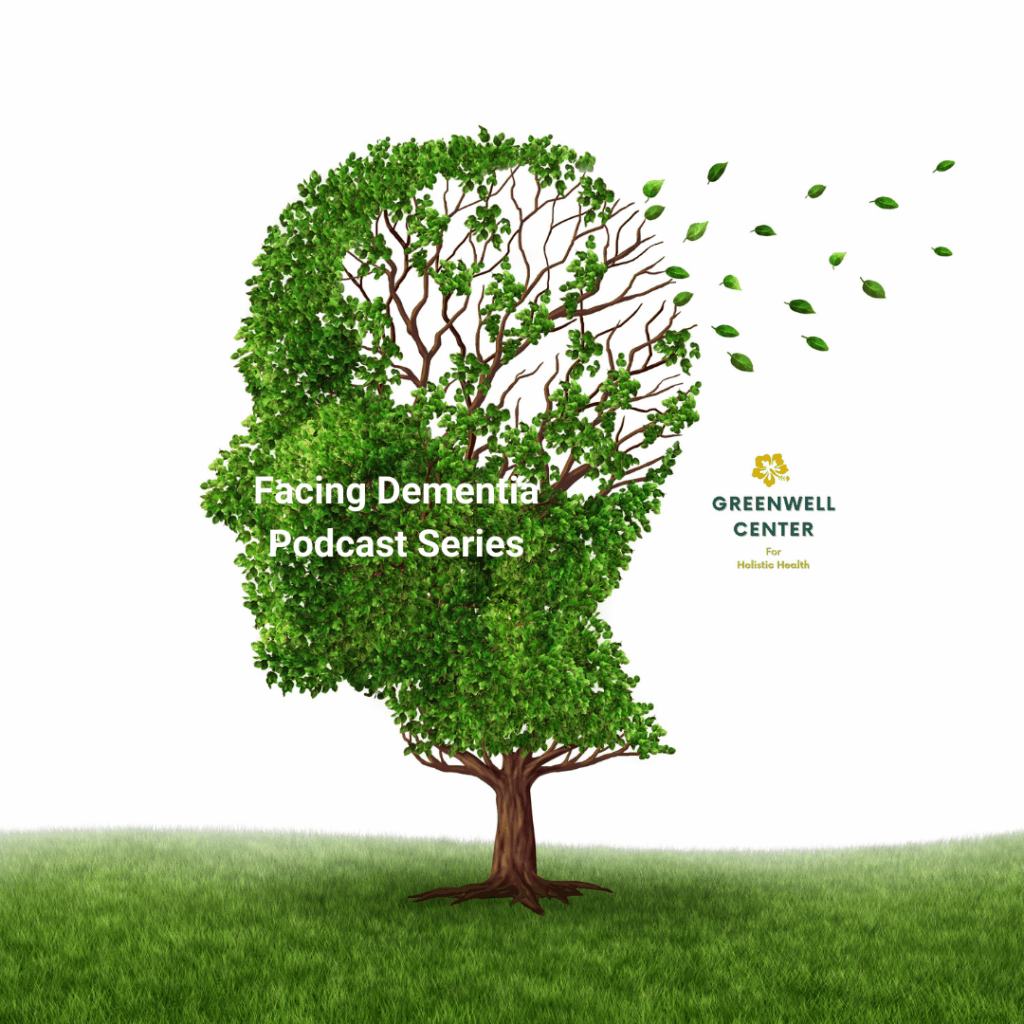
In the fourth episode of Facing Dementia, Dr. Michelle Greenwell and Laurin Wittig turn their attention to a powerful yet often misunderstood ally in cognitive wellbeing: creativity. While most research on dementia and brain health focuses on cognition alone, this conversation widens the lens, exploring how creativity emerges from the body, the senses, and the energetic systems that support neural function.
What the Science Says About Creativity and the Brain
Scientific studies consistently show that creative engagement supports neuroplasticity, the brain’s ability to form new connections, adapt to change, and recover from stress. Activities such as art-making, writing, problem-solving, and imaginative play stimulate multiple regions of the brain simultaneously, strengthening communication between hemispheres and neural networks.
Creativity has also been linked to improved executive function, emotional regulation, and cognitive flexibility—all essential factors in healthy aging. For individuals navigating memory challenges or early cognitive changes, creative practices may slow functional decline by encouraging the brain to find alternative pathways for expression and understanding.
However, much of this research still frames creativity as a mental activity. What is often missing is the foundational role of the body.
Why Movement Is Essential for Brain Function
From a movement science and bioenergetic wellness perspective, the brain cannot operate at full capacity without accurate information about the body’s position in space—a process known as proprioception. This information is largely transmitted through movement of the shoulder seams and hip seams.
- The shoulders inform the brain about reaching, interacting, and relating to the world.
- The hips anchor balance, grounding, and forward momentum.
When these joints are restricted, the brain receives incomplete data, increasing neurological stress and reducing cognitive efficiency. Conversely, fluid movement of the hips and shoulders enhances sensory feedback, stabilizes the nervous system, and supports creative thinking.
The hips, in particular, are vital energy centers. In many movement traditions, they are understood as reservoirs of vital energy, supporting stamina, adaptability, and clarity—qualities deeply intertwined with creativity and resilience. In Tai Chi we refer to this as the Lower Dan Tien, where the ‘Golden Pill’ or vital energy for the body is built and stored for use later.
Music, Memory, and the Power of Frequency
Much attention has been given to studies showing how music reaches parts of the brain associated with emotion and memory, even when cognitive recognition is impaired. This is especially relevant in dementia care, where familiar songs can evoke vivid emotional responses long after names or facts fade.
Beyond melody, there is growing interest in the role of frequency and vibration. Sound waves influence brainwave states, nervous system regulation, and emotional balance. Similarly, colour frequency—how the brain and body respond to light wavelengths—can affect mood, focus, and energy levels.
Creativity thrives when these sensory frequencies are harmonized. Sound, colour, and movement work together to create an environment where the brain feels safe, stimulated, and supported.
The Five Senses and Embodied Creativity
One of the most accessible tools for supporting creativity and mental health is conscious sensory engagement. When we fully engage our five senses—sight, sound, touch, taste, and smell—we anchor ourselves in the present moment. This reduces anxiety, calms the nervous system, and strengthens memory formation.
Sensory-rich experiences create what are often called embodied memories—memories that are stored not just cognitively, but emotionally and physically. These memories remain accessible even when cognitive recall becomes challenging, offering comfort, orientation, and a sense of identity.
Tea as a Daily Creative Ritual
In this episode, the tea Take the Shore Road becomes both metaphor and nutrition. Featuring blue pea flower, hibiscus, and green tea, this blend supports brain health through circulation, antioxidant protection, and gentle cognitive stimulation.
The affirmation associated with the tea—“Be present and mindful of all that you see when you slow down and check out the view”—reinforces the role of mindfulness and sensory awareness in creative living. Tea rituals invite pause, reflection, and engagement with the senses, creating space for creativity to unfold naturally.
Creativity as a Path Forward
For Laurin, creativity is no longer simply an artistic outlet—it is a strategic and soulful component of her wellbeing following a precursor to dementia diagnosis. Writing, mentoring, movement, and sensory rituals have become ways of supporting brain health while cultivating meaning and joy.
This episode of Facing Dementia reminds us that creativity is not optional. It is an essential biological process—one that connects brain, body, energy, and experience. By moving, sensing, listening, and creating, we give the brain what it needs to adapt, heal, and thrive.
Creativity, it turns out, may be one of our most powerful tools for aging with intention, resilience, and hope.
Special Movements for Hips and Shoulders
In dance and Tai Chi we have the opportunity to inspire the brain. At Tai Chi Cape Breton, our in-person classes empower you several times a week as we meet to bring brain health, memory, clarity, and cognition to the forefront. If you live in the West Kelowna, Peachland area of B.C. the in-person classes with Wine Country Tai Chi Society can support you with many classes through the week. At the Greenwell Center, our online classes can inspire a deep dive into creativity with our Symphony of Radiance program (formerly Movement and Music), which includes movement, music, art, nature, herbs, colour, and connection, along with intentional content. It is a deep immersion that will inspire more reflection and participation for your wellness journey.
Perhaps you want to learn more about Sound and Frequency. Michelle and Ann-Marie Boudreau are teaming up for two special retreats (Feb and March) to support your expansion into the power of your own voice for healing. Check out the events here: Awaken Inner Resonance.
Perhaps you want to be more creative in your writing skills? Stay tuned for our next Steeped in Story event coming soon.
Lastly, perhaps you want to more about healing with energy. Our long-lasting, award-winning, Qi YINtegration program will be taking a closer look at the role of healer and healee in community. We will be exploring a deep dive into the Innate Power of Healing. And, we have an online Level 1 Touch for Health class beginning in January for those wanting to understand the background of Chinese Medicine and Five Element Theory. This is a great introduction for anyone wanting to understand meridians, organ systems, simple self-care tools and more.
So many great ways to begin your journey of discovery and magnifying your healing potential. Enjoy the podcast and the upcoming episodes that continue to expand your awareness of health and healing.