
What if wellness was not something we had to chase, achieve or fix?
What if, instead, we could create the conditions that allow us to notice more, move more freely, connect more deeply, become curious about ourselves and discover possibilities we may not have recognized before?
This is at the heart of Art-filled Wellness.
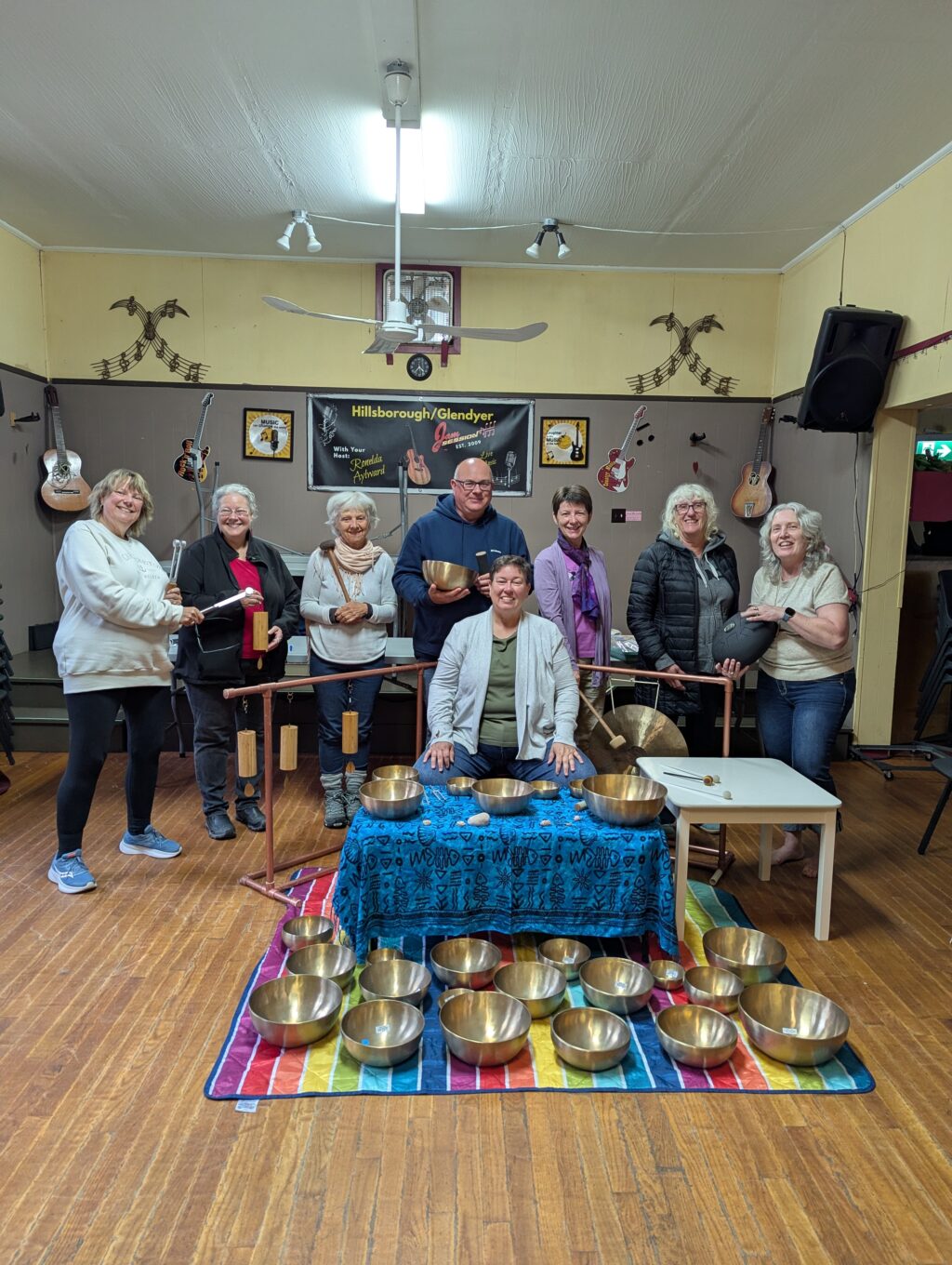
Following our recent eight-day Art-filled Wellness Retreat on Cape Breton Island, I have been reflecting on how to describe what actually happened. We painted and created art. We practiced Tai Chi. We listened and moved to live music. We explored sound, voice, journaling and meditation. We experienced Therapeutic Touch®. We spent time beside the ocean, in gardens, in community spaces and around tables filled with local food. We explored the biofield, movement patterns, perspective, reflection, intention and the ways our bodies respond when we change the conditions around us.
But Art-filled Wellness was never simply a collection of activities.
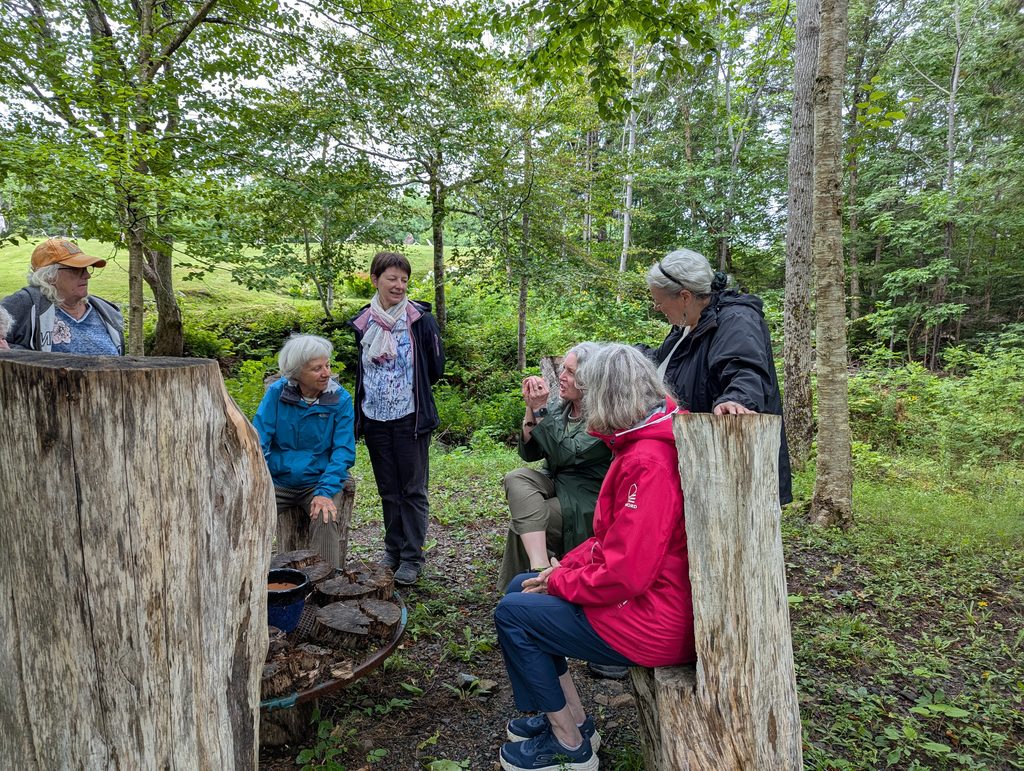
Something much more interesting happened when those experiences began to interact. Here we are at Doug Fraser’s Art Studio just outside of Inverness, NS in his living sculpture garden.
Wellness as a Living Experience
Art-filled Wellness grows from the perspective of BioEnergetic Wellness (BEW), an approach to wellbeing that asks us to become active participants in recognizing what supports our own organization, adaptability and vitality.
Within BEW, we work with a circular process:
Goal → Intention → Awareness → Activation → Community → Intuition
We may begin with an idea of what we would like to explore, but we do not prescribe what the outcome must be. We create an intention, become aware of what is happening, engage with experiences that offer new information and possibilities, learn with and through others, and become increasingly able to recognize our own intuitive responses.
During the retreat, people did not need to memorize this formula.
They lived it.
Someone might notice that a Tai Chi movement initially felt awkward. Then live music entered the experience and suddenly the movement changed.
Someone might look at a landscape in one way and, after exploring an artist’s perspective, discover something completely different in the same scene.
A journal question might begin as a thought, while sound and frequency later offered a way of reflecting that no longer required words.
A creative image might take on meaning the following day.
A conversation over food might alter how someone understood an experience from earlier that morning.
None of these moments existed in isolation.
That is where Art-filled Wellness becomes particularly interesting.
What Does Art Have to Do With Wellness?
When we use the word art, it is easy to think first about painting, drawing, music or performance.
Art-filled Wellness expands that idea.
Art can be found in the way we move. It can be in the rhythm of preparing tea, the way we listen to another person, the colours we notice while walking, the arrangement of food on a plate, the sound of a voice, the shape our body creates through Tai Chi, or the curiosity we bring to a problem at work.
Art invites us to notice.
And noticing can change our relationship with wellness.
Rather than constantly asking, “What is wrong with me and how do I fix it?”, we can become curious:
What gives me energy?
What changes the way I move?
What helps me feel more like myself?
Where do I experience ease?
What catches my attention?
What becomes possible when I change my perspective?
These are very different wellness questions.
They move us from correction toward discovery.
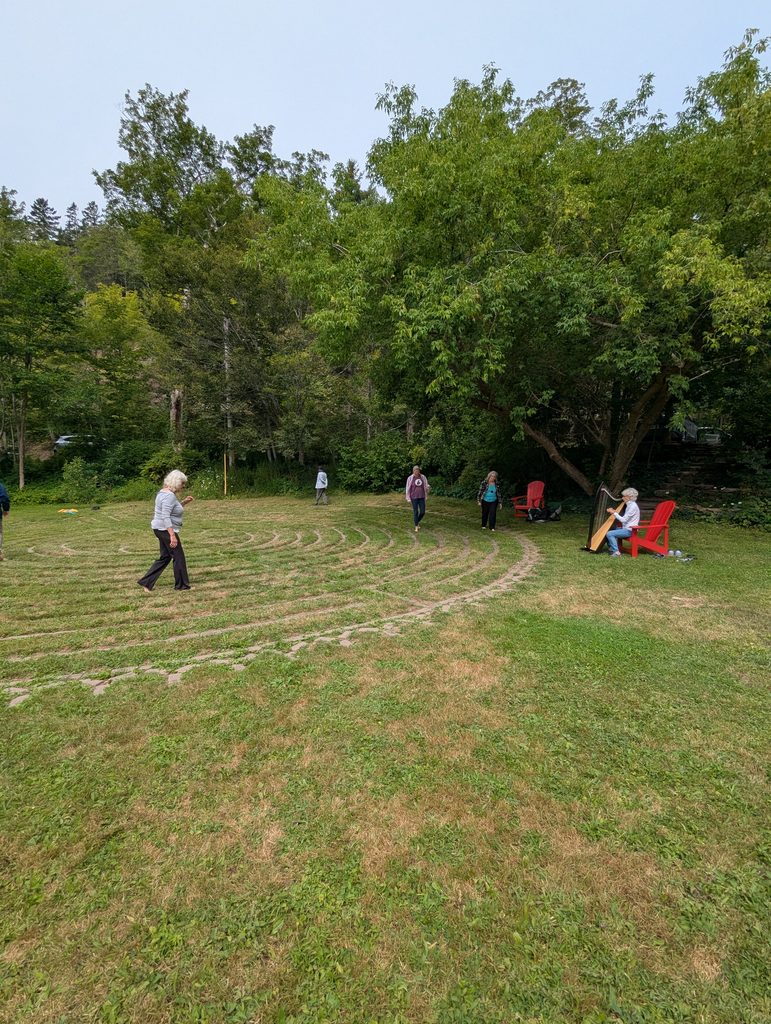
Here we are at the Glendyer Inn labyrinth. The garden, harp music, and stonework was so inspiring. Eagles and dragonflies joined us too.
Energy and Vitality in Everyday Life
Most people do not wake up in the morning wanting another wellness program.
We want enough energy for the things that matter.
We want to think clearly during a meeting, enjoy a walk, play with our grandchildren, create something, move comfortably, prepare a meal, spend time with friends, contribute meaningfully to our work and still have something left at the end of the day.
That is why vitality matters.
Art-filled Wellness asks us to become more aware of the experiences that influence that vitality.
Perhaps three minutes of music changes the way you prepare for your morning.
Perhaps moving before a difficult conversation changes how you enter it.
Perhaps sitting outside while drinking tea allows you to notice something you could not see while looking at a screen.
Perhaps writing one question in a journal creates a new perspective on a project.
Perhaps making an unfamiliar sound reminds you that your voice can occupy space.
Perhaps walking with someone changes both the conversation and the way your body feels.
None of these needs to be complicated.
The power may lie in learning to notice what changes us.
When the Experiences Begin to Talk to Each Other
One of the most significant discoveries from the retreat was that the experiences did not remain separate.
The musicians responded to the movers.
The movers responded to the music.
Nature influenced art.
Art influenced perspective.
Perspective influenced reflection.
Reflection influenced conversation.
Conversation influenced community.
And community created conditions in which people felt able to explore things they might not have explored alone.
This is why I have begun to think of Art-filled Wellness as a living ecology.
In an ecology, one element influences another. We cannot always isolate a single cause and say, “That was the thing that created the change.”
Human wellbeing may be much more like that than we sometimes acknowledge.
Our movement, environment, relationships, sensory experiences, thoughts, creativity, food, rest, purpose and sense of belonging continually interact.
Art-filled Wellness gives us permission to explore those relationships intentionally.
The Facilitator Does Not Have to Have the Answer
Another important part of this approach is partnership.
An Art-filled Wellness facilitator is not there to decide what another person should discover.
The artist does not need to tell you what you should see.
The musician does not need to tell your body how it should move.
The person asking the reflective question does not need to know your answer.
The facilitator helps create conditions for exploration and then remains curious about what emerges.
That changes the relationship from:
“I have something you need.”
to:
“Let’s discover what becomes possible here.”
It is a subtle shift, but an important one.
It also allows everyone involved—including the facilitator—to remain a learner.
During our retreat, some of the most exciting moments occurred when the people leading experiences discovered something new too.
Art-filled Wellness Is Future-Oriented
There is another aspect of Art-filled Wellness that became increasingly apparent during the week.
We were not only reflecting on who we had been.
We were creating opportunities to discover who we might become.
We began the retreat differently. Rather than introducing ourselves primarily through credentials, occupations, books, techniques or accomplishments, we considered what we hoped to discover and who we might become through our time together.
That changed the room.
For a moment, expertise mattered less than possibility.
Art naturally supports this kind of future orientation because creation brings something into existence that was not there before.
A movement can become different.
A blank page can become an image.
Silence can become music.
A question can become a new direction.
Strangers can become community.
An idea can become an experience.
And a person can begin to recognize possibilities for themselves that they could not see before.
Bringing Art-filled Wellness Home
You do not need an eight-day retreat to begin exploring Art-filled Wellness.
You can start today.
Choose one ordinary activity—making tea, walking, preparing dinner, exercising, attending a meeting or sitting outside.
Instead of moving through it automatically, bring curiosity to it.
Notice colour.
Notice sound.
Notice your movement.
Notice your breath.
Notice what gives you energy and what takes energy away.
Notice what changes when another person enters the experience.
And perhaps ask yourself one question:
What is possible here that I haven’t noticed yet?
You do not need to force an answer.
The noticing is the beginning.
What We Are Still Discovering
Our Art-filled Wellness Retreat did not give us a final definition of wellness.
It gave us better questions.
Over the coming months, I will be sharing some of the remarkable experiences and discoveries that emerged during our time together: changing perspective through art and nature; moving with Tai Chi and live music; intuitive art and future orientation; sound and reflection beyond words; journaling and meditation; Therapeutic Touch®; voice and receiving; community; local food; and what happens when artists, facilitators and participants stop working in isolation and begin discovering together.
We will also explore how these ideas connect with BioEnergetic Wellness and with the growing conversation around arts, health and human flourishing.
Most importantly, I want to explore what all of this can mean beyond a retreat.
What does an art-filled meeting look like?
An art-filled walk?
An art-filled exercise practice?
An art-filled workplace?
An art-filled relationship?
An art-filled day?
Perhaps Art-filled Wellness is ultimately not about adding more things to our lives.
Perhaps it is about learning to experience the lives we already have with greater awareness, curiosity, connection and possibility.
And perhaps that is where energy and vitality begin—not with another demand to become better, but with an invitation to become more fully involved in being alive.
What might become possible if you made a little more room for art in your wellness today?